Our Mission on a Sleeve: Decoding the Tanager-2 Patch
Published on: Oct 05, 2026
Attendees at the Tanager-2 launch event were treated to some swag: a special patch for the Tanager-2 launch! The design says a lot about our work, so we’re breaking it down.
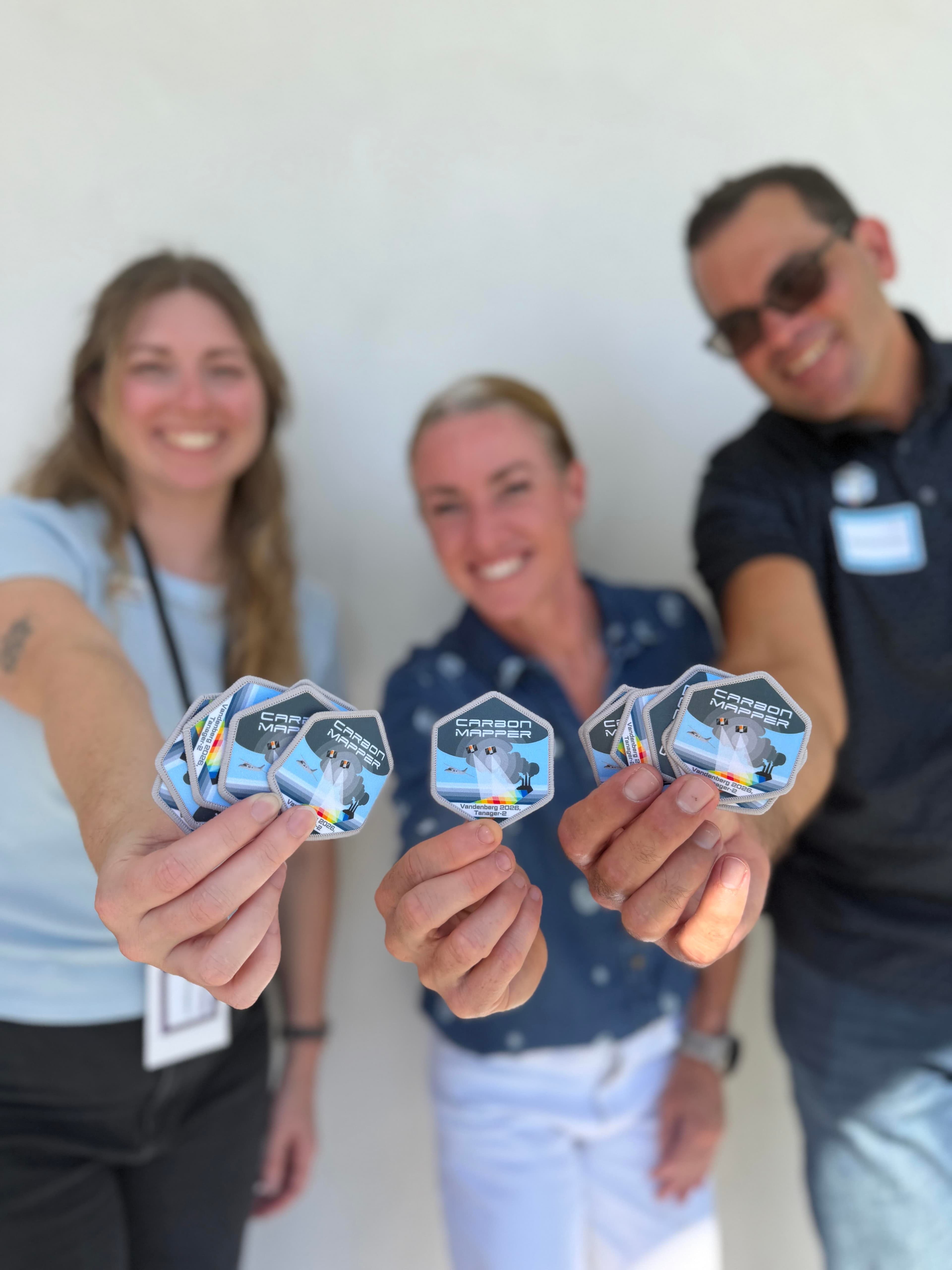
Carbon Mapper and Planet employees showcase the Tanager-2 mission patch after a successful satellite launch from Vandenberg Space Force Base on Oct. 1, 2026.
The power plant and plume
Carbon Mapper uses remote sensing technology to pinpoint, quantify, track, and ultimately mitigate methane super-emitters. These are sources from the fossil fuel, waste, and agriculture sectors that have an outsized impact on the climate and present an immediate opportunity for meaningful action. We publish observational data from thousands of methane plumes to our public portal, bringing transparency to the exact sources of emissions worldwide.
The two satellites
Tanager-2 is the second satellite in a growing constellation built by Planet Labs that Carbon Mapper uses to make methane emissions data accessible and actionable. On October 1, 2026, it joined Tanager-1 in orbit, which was launched in 2024.
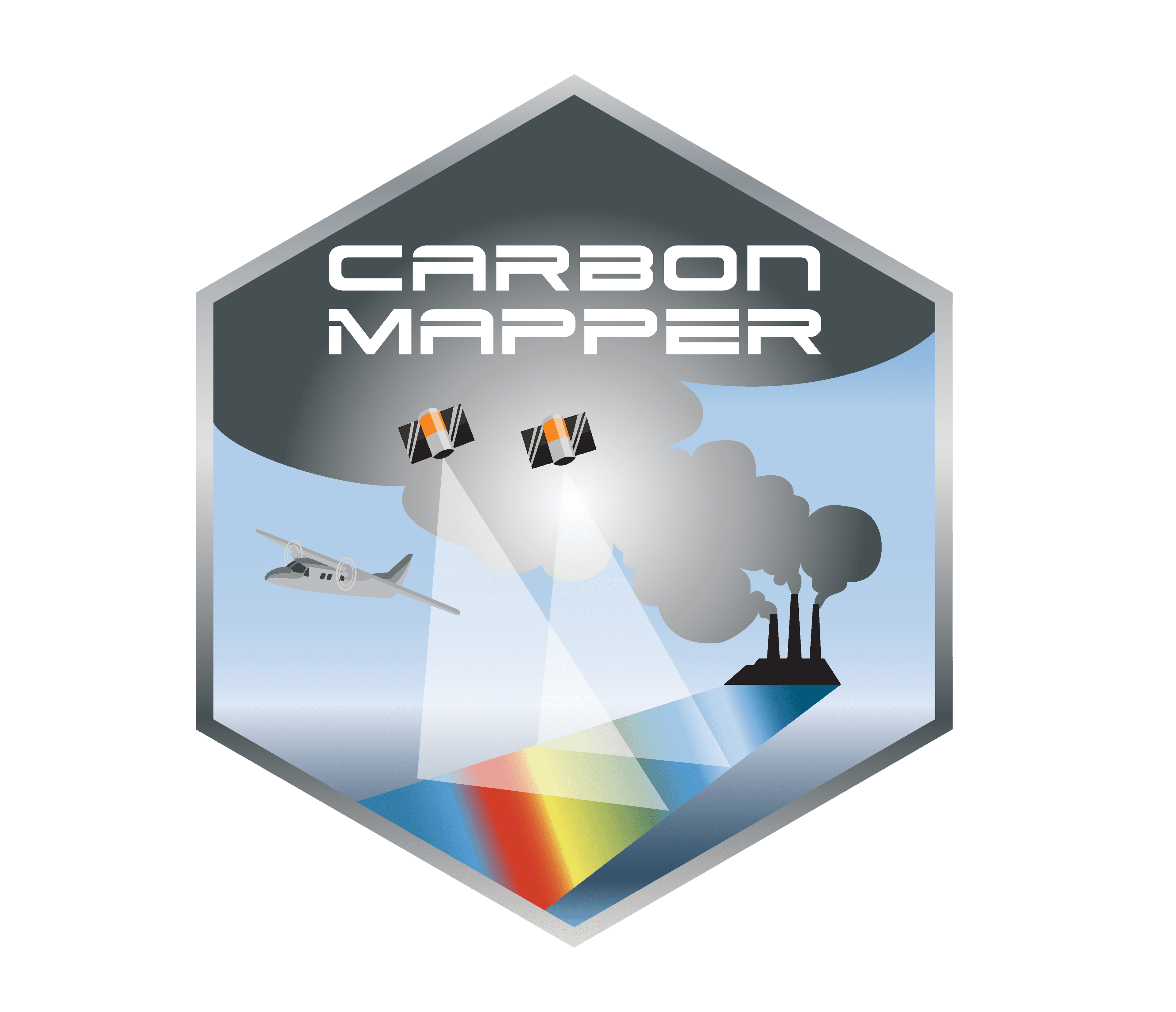
The Tanager mission patch was designed to celebrate the launch of the second methane-detecting satellite in Carbon Mapper's growing constellation.
The aircraft
Carbon Mapper also conducts airborne surveys over key geographies and plans to deploy a new imaging spectrometer, optimized for short-wave infrared (SWIR) imagery, onboard an aircraft beginning in 2027.
The rainbow
Tanagers are hyperspectral satellites, meaning they obtain the full spectrum for each pixel in every scene they capture, with the purpose of finding objects. The imaging spectrometers onboard measure the hundreds of wavelengths of light reflected by the Earth’s surface and absorbed by gases in our atmosphere. Greenhouse gases, like methane and CO2, absorb different wavelengths of light leaving a kind of spectral fingerprint not visible to the human eye. When analyzed, these light signatures can reveal which substances produced the fingerprint. Learn more about how Carbon Mapper ‘sees’ methane.
Learn more about Tanager-2 and how the second satellite in a growing constellation will help Carbon Mapper scale methane mitigation impact.